Easy Homework Help System: Routines, Checklists & Calm
Homework Help Made Easy: A Low-Stress System Parents Can Repeat
Homework goes more smoothly when expectations are clear, routines are predictable, and kids gradually take ownership. The goal at home isn’t to re-teach every lesson—it’s to create a setup where your child can start on time, stay on track, and finish with confidence. Below are practical, low-drama ways to build a home homework system, plus printable support that keeps everyone consistent on busy weeknights.
What “help” should look like at home
Effective homework help is less about sitting shoulder-to-shoulder and more about supporting the process. When the process is stable, kids can do more of the thinking themselves.
- Shift from “doing it together” to “supporting the process.” Set up time, space, and check-ins—then step back so your child practices independence.
- Clarify roles. The parent is the coach (structure + encouragement); the child is the doer (thinking + completing).
- Aim for progress, not perfection. Consistency, effort, and learning from mistakes matter more than flawless work.
- Find the real blocker before adding more time. Fatigue, unclear directions, skill gaps, distractions, and anxiety each need a different fix.
For research-backed guidance on healthy study habits, see the American Academy of Pediatrics (HealthyChildren.org) and the American Psychological Association.
Set up a homework routine that kids can repeat
When homework happens at a predictable time in a predictable way, your child spends less energy negotiating and more energy working.
- Pick a consistent homework window tied to an existing routine (after snack, after a short break, before screen time).
- Keep the setup simple: one spot, basic supplies, minimal distractions, water/snack nearby.
- Use a short start-up ritual: review assignments, pick the first task, set a timer, begin.
- Plan for movement breaks. Many kids work better in short blocks with quick resets.
- Close with a wrap-up: backpack check, tomorrow preview, materials away.
Sample homework routine by age (adjust to your child’s needs)
| Age/Stage | Work block | Break | Parent role | Independence goal |
|---|---|---|---|---|
| Early elementary | 10–15 min | 3–5 min | Stay nearby; prompt starting; praise effort | Start within 2 minutes of sitting down |
| Upper elementary | 15–25 min | 5 min | Check-in at start and midpoint | Use checklist without reminders |
| Middle school | 25–35 min | 5–10 min | Brief check at start; review plan at end | Prioritize tasks and track deadlines |
| High school | 35–50 min | 10 min | Available on request; weekly planning meeting | Self-manage workload and advocate for help |
Simple strategies that reduce homework resistance
Resistance usually comes from overwhelm, low confidence, or a “this will take forever” feeling. These quick strategies reduce friction without turning homework into a nightly showdown.
- Make tasks feel smaller. Break the assignment into steps (read directions, gather materials, do #1–5, check work).
- Use “first/then” language. First one small task, then a preferred activity or a short break.
- Replace nagging with visual cues. Checklists, timers, and a simple routine board do the reminding for you.
- Neutralize power struggles with choices. Offer choices about where to sit or which subject to start—not whether homework happens.
- Build momentum with a quick win. Start with the easiest item so your child experiences progress right away.
Teach independent learning skills (without hovering)
Independence grows when kids learn what to do before they ask for help. The goal is fewer rescues and more problem-solving.
When homework is a daily struggle: quick troubleshooting
Printable support that keeps everyone consistent
Homework Help Made Easy Toolkit for Parents: what’s included and who it fits
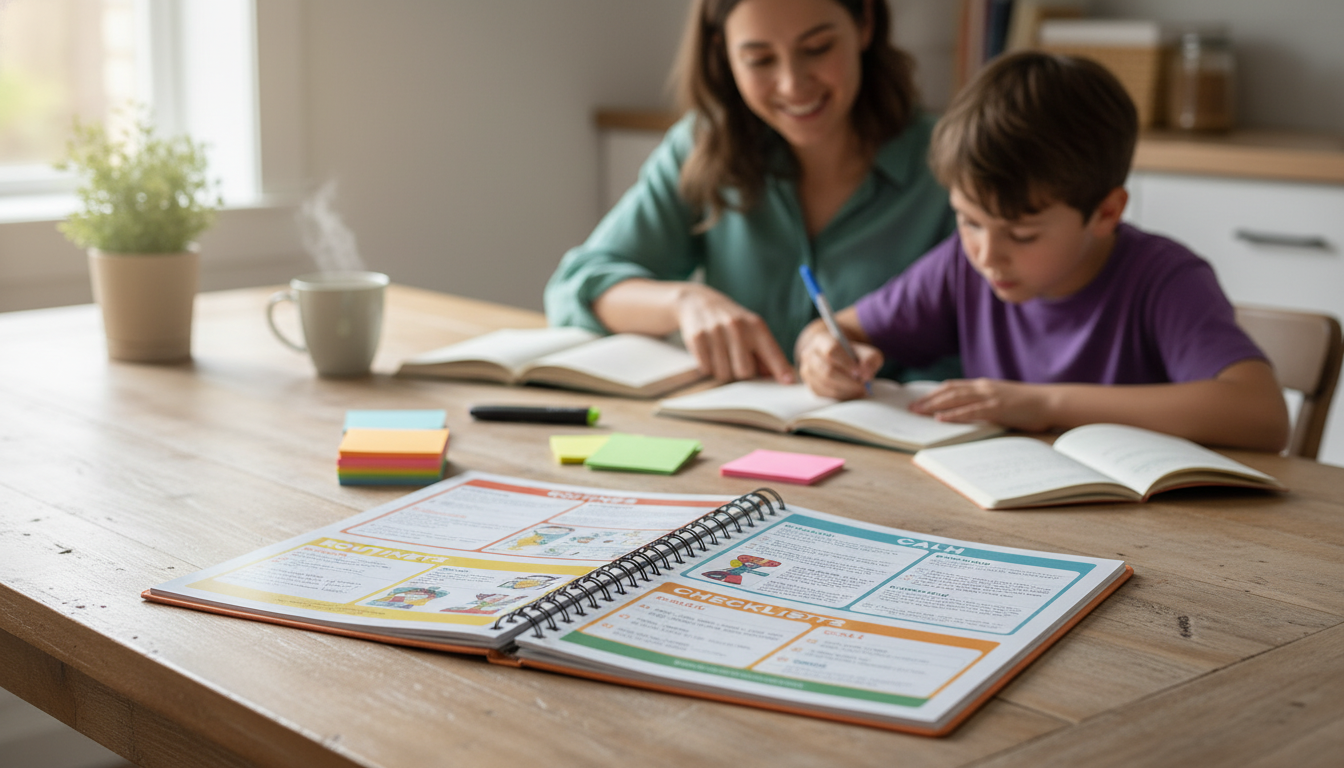
If you want a repeatable home system that reduces reminders and builds ownership, the Homework Help Made Easy Toolkit for Parents – Printable Guide for Creating Study Habits, Homework Strategies & Independent Learning is designed to make homework time more predictable.
If homework stress is affecting the whole household (sleep, patience, routines), consider pairing your homework system with a parent self-care reset like Whole You: Holistic Wellness Guide | Beginner Wellness Ebook | Digital Download on Nutrition, Exercise, Mental Health & Self-Care to help you stay consistent and calm through busy school weeks.
Quick fit check
| If you want… | This helps by… |
|---|---|
| Less arguing at homework time | Replacing reminders with routines, visual checklists, and clear steps |
| More independence | Teaching planning, self-checking, and problem-solving prompts |
| Better follow-through | Creating consistent start/end rituals and predictable work blocks |
| A simple home system | Providing printable structure that stays the same day to day |
FAQ
Who helps you with your homework?
Healthy homework support can come from a parent/guardian, teacher, tutor, or older sibling, but the student should still do the thinking and the work. A simple way to ask for help is: “Here’s what I tried, here’s where I got stuck, and here’s my question.” If no adult is available, the best next step is to re-read directions, attempt one small part, and write down a specific question to ask later.
How much help is too much when a child is doing homework?
It’s too much when an adult is providing answers, hovering constantly, or the child can’t start without step-by-step guidance. Aim for gradual release: do one together, prompt the next, then have your child complete one independently while you only check in briefly. Independence looks like starting on time, using a checklist, and asking targeted questions instead of waiting to be rescued.
What should a parent do if homework takes hours every night?
Track time and pain points for a week, then adjust with shorter work blocks, planned breaks, and a consistent start ritual. If directions are unclear or skills seem shaky, collect a few specific examples and contact the teacher with concrete notes. Excessive nightly homework is often a signal that expectations, workload, or support needs should be clarified.










Leave a comment