Printable Cat Body Language Cheat Sheet: Signals & Meows
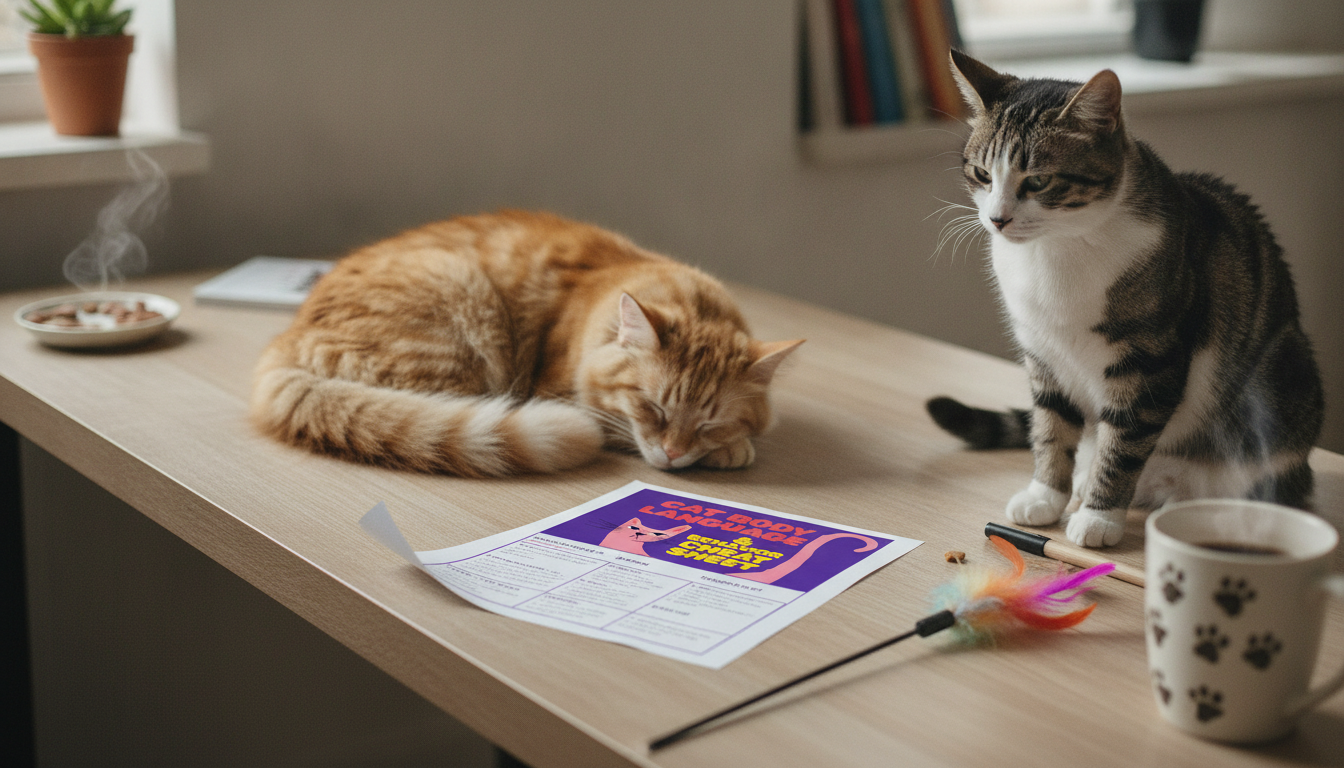
Cat Body Language & Behavior Cheat Sheet: A Printable Guide to Signals, Postures, and Meows
Cats communicate constantly—often without a single sound. Reading tail positions, ear angles, posture, and vocal patterns can help reduce stress, prevent bites and scratches, and build trust faster. This guide breaks common feline signals into quick, practical meanings and safe next steps, with a printable cheat sheet for everyday reference.
Why cat communication can feel confusing
Feline communication is layered. Cats use body language, scent, touch, and vocalizations together, and a single sign can change meaning depending on what else is happening.
- Many signals are subtle and fast: slow blinks, whisker shifts, tiny freezes, and quick head turns.
- Stress and overstimulation can flip behavior quickly, especially during petting, play, or introductions.
- Kittens, seniors, and shy cats may show “quieter” versions of the same emotions.
- Reading signal clusters (ears + tail + posture) is more reliable than judging one feature alone.
Core body language: the fast read
When you need a quick assessment, scan in this order: ears, eyes, tail, then overall body tension. That sequence tends to reveal whether a cat is comfortable, conflicted, or ready to bolt.
Ears
- Forward: curious, engaged, often friendly.
- Sideways (“airplane ears”): uncertainty, overstimulation, or vigilance.
- Pinned back: fear or defensive aggression risk; pause interaction.
Eyes
- Soft eyes + slow blink: comfort and trust.
- Wide eyes + dilated pupils: fear, excitement, or play arousal—confirm with posture and tail.
Tail
- Upright tail: friendly confidence, greeting, social intent.
- Puffed tail: fear/arousal; the cat is trying to look bigger.
- Rapid lashing: irritation or “too much”; stop what you’re doing.
Body posture
- Loose, side-lying, relaxed limbs: generally comfortable.
- Belly-up with relaxed body: often trust, not always touch permission.
- Crouched with tension: uncertain or fearful; needs space and options to retreat.
- Stiff, forward-leaning: potential confrontation; avoid approaching.
Whiskers
- Neutral: relaxed baseline.
- Pushed forward: hunting/play focus or intense interest.
- Flattened back: stress, discomfort, or defensive state.
Vocalizations
- Meows: often directed at humans as requests or greetings.
- Growls/yowls: distress, conflict, or fear.
- Purring: commonly comfort, but can also happen with pain or stress—check the full picture.
Cheat sheet table: signal clusters and what to do next
Use the table as a quick reference, but always consider the environment (new visitor, loud noise, another pet nearby, hunger, or pain). When unsure, choose the least intrusive response: pause, give space, and keep things predictable.
| What you see | Likely meaning | What to do |
|---|---|---|
| Tail up, ears forward, relaxed body | Friendly/approachable | Offer a hand to sniff; gentle petting on head/cheeks if the cat leans in |
| Slow blink, soft eyes, relaxed whiskers | Comfort and trust | Slow blink back; speak softly; maintain calm routine |
| Ears sideways, crouched body, looking away | Uncertain/overwhelmed | Reduce stimulation; allow retreat; use treats at a distance |
| Tail thumping or lashing, skin twitching during petting | Overstimulated/irritated | Stop petting; give space; switch to play later if appropriate |
| Puffed tail, arched back, sideways stance | Fear/defensive display | Do not approach; provide escape routes; separate from triggers |
| Growling/hissing, pinned ears, stiff body | Defensive aggression or high fear | Back away; avoid eye contact; end interaction; consider barriers/separation |
| Chirps/trills, tail up, rubbing legs | Greeting/attention-seeking | Greet calmly; offer interactive play or routine attention |
| Crouched, hiding, not eating, behavior change | Stress or possible illness/pain | Check environment; monitor litter box; contact a veterinarian if persistent |
Meows, purrs, and other sounds: what they often mean
- Short meows: greeting or request (food, door, attention). Confirm with tail and ears.
- Repeated/escalating meows: urgency, frustration, or a habit shaped by past responses.
- Yowling/howling: distress, territorial conflict, disorientation (especially in seniors), or mating-related behavior in unaltered cats.
- Purring: common in content cats, but also seen during stress or pain; watch for hiding, low posture, appetite changes, or sudden grumpiness.
- Chattering at windows: high arousal/frustration while watching prey. Add play sessions to help release energy safely.
Petting, play, and the “too much” line
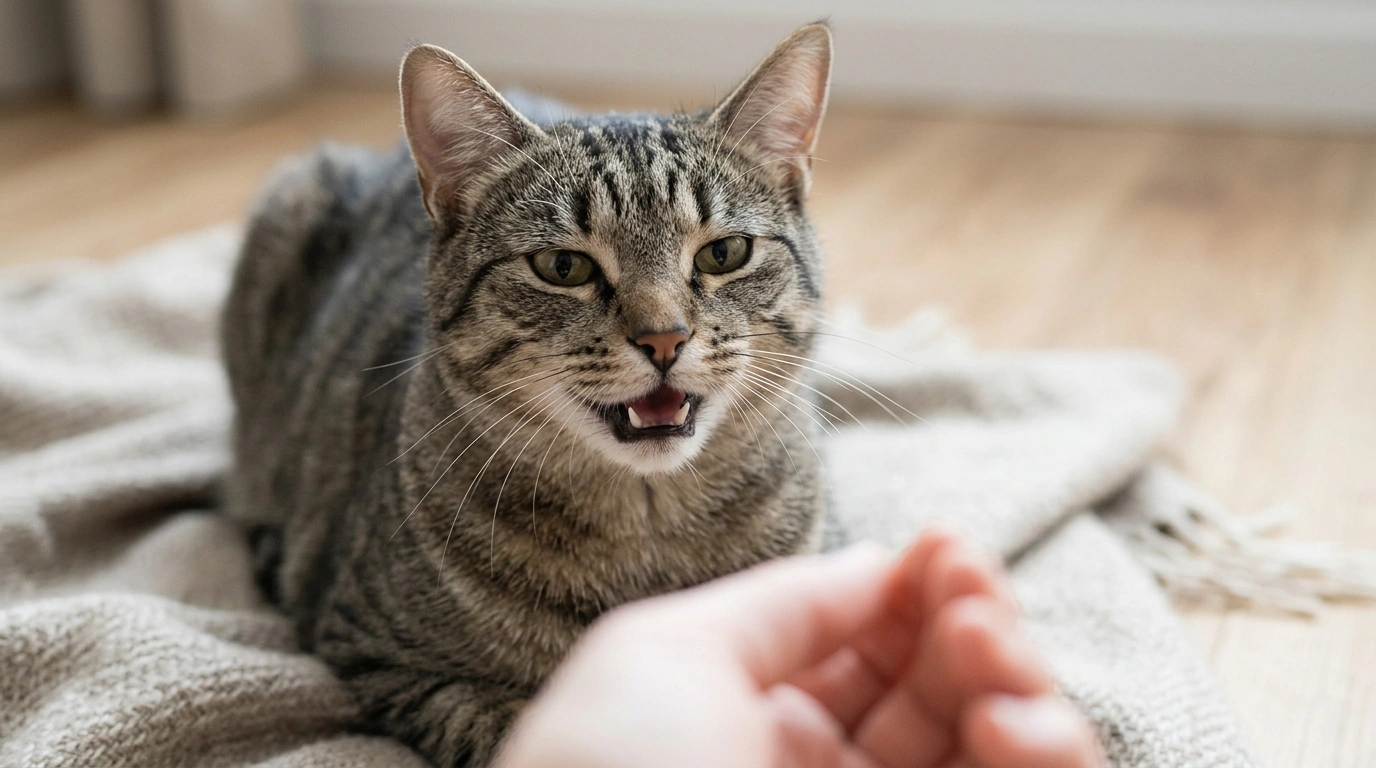
Many bites and scratches happen when a cat goes from “fine” to “done” in seconds. The goal is to notice the early warnings and end interactions before the cat has to escalate.
Stress signals and how to calm the environment
For deeper behavior guidance, see the American Association of Feline Practitioners (AAFP) — Feline Behavior Guidelines and International Cat Care — Understanding cat behaviour.
Printable quick-reference: where a cheat sheet helps most
Printable Cat Body Language & Behavior Cheat Sheet
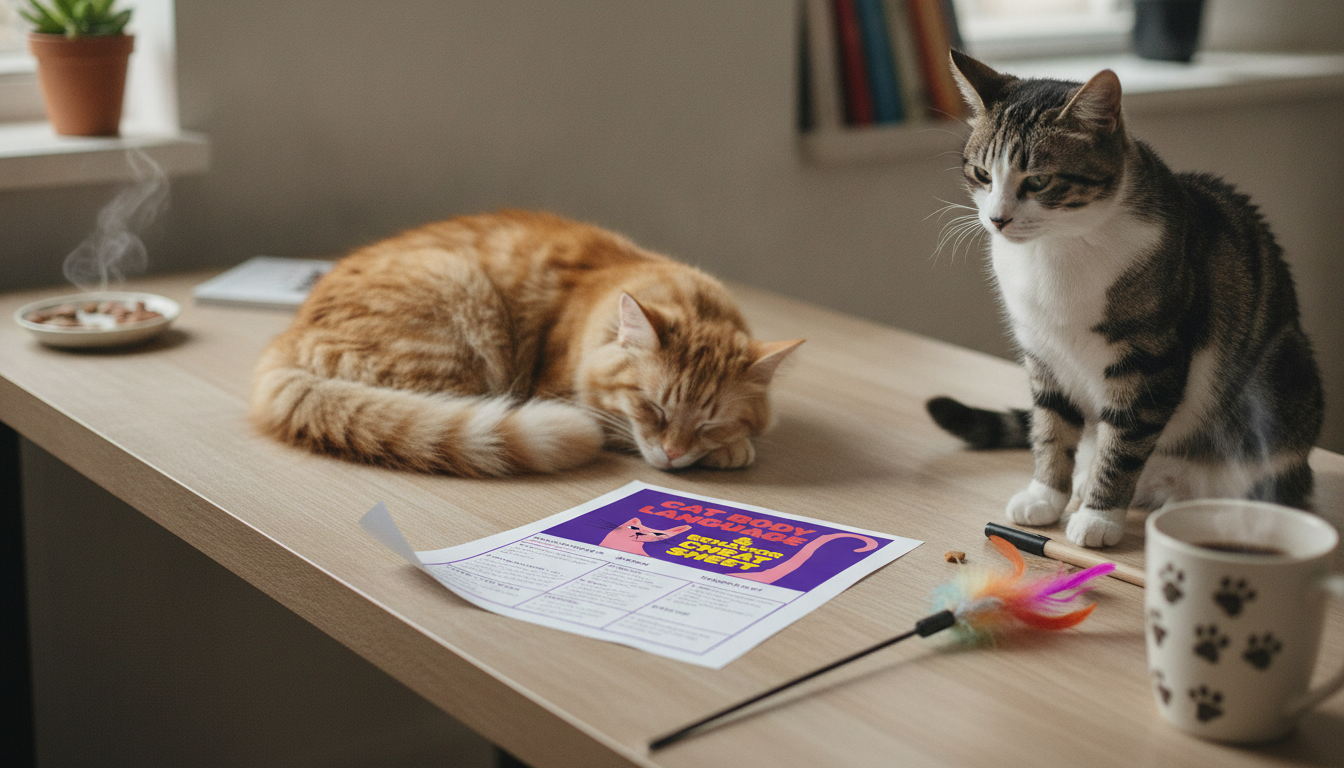
For a ready-to-print reference you can keep on the fridge or share with sitters, use the Printable Cat Body Language & Behavior Cheat Sheet. It summarizes common feline signals, postures, and meows in an easy format designed for quick decisions: when to engage, when to pause, and when to give space.
It pairs well with a household emergency reference like the Must-Know Pet First-Aid Cheat Sheet, especially for new pet guardians or anyone who regularly cat-sits.
FAQ
Does purring always mean a cat is happy?
No. Purring often signals comfort, but some cats also purr when they’re stressed or in pain. Check posture, appetite, hiding, and any sudden behavior changes, and contact a veterinarian if you’re concerned.
What does it mean when a cat shows its belly?
Belly-up commonly indicates relaxation and trust, but it isn’t always an invitation to pet the belly. Start with cheek or head pets and watch for tail lashing, stiffening, or ear changes before attempting more contact.
How can petting lead to sudden biting?
Many cats bite due to overstimulation after their tolerance threshold is crossed. Watch for tail lashing, skin twitching, ears turning back, or sudden stillness, and use shorter petting bursts with a quick “consent test” to prevent escalation.









Leave a comment