4-in-1 Anxiety Relief Bundle: Mindfulness to Daily Calm
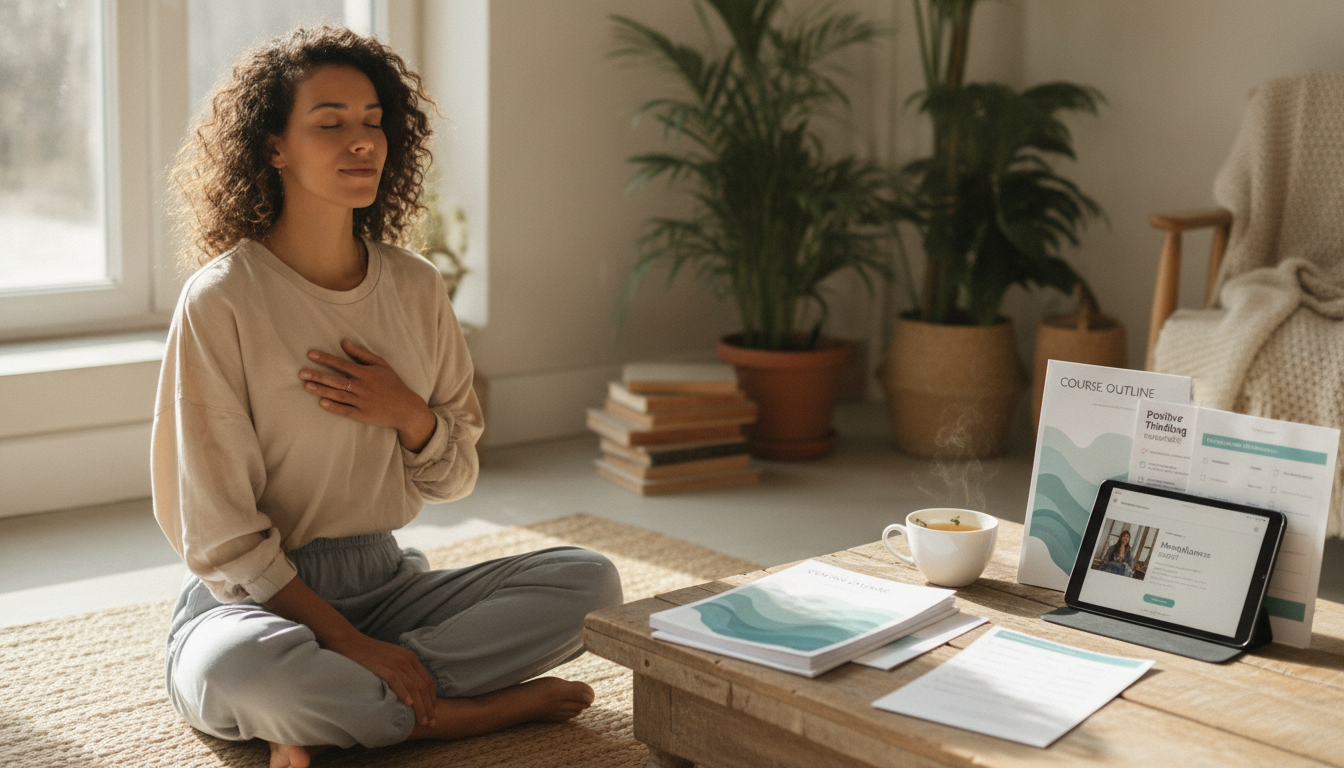
The Anxiety Relief Bundle: A Path to Calm — A 4-in-1 Toolkit for Mindfulness, Positive Thinking, and Daily Structure
Anxiety can feel like a loop of racing thoughts, body tension, and constant “what ifs.” A calmer day often comes from small, repeatable habits rather than big, one-time breakthroughs. The Anxiety Relief Bundle: A Path to Calm brings together guided mindfulness exercises, positive thinking practices, a printable checklist, and a course-style outline to help build a steady routine—one step at a time.
While self-guided tools can be powerful, it also helps to keep expectations realistic: anxiety relief is often a skill-building process. For background on anxiety disorders and when to seek help, visit the National Institute of Mental Health (NIMH) and the Mayo Clinic.
What’s Included in the 4-in-1 Bundle
This bundle is designed to lower the barrier to practice by giving you four coordinated tools you can reuse in different moments—work stress, social anxiety, or sleep worries.
- Mindfulness exercises to practice grounding, attention training, and present-moment awareness during stressful moments.
- Positive thinking activities designed to challenge unhelpful thought patterns and reinforce more balanced self-talk.
- Printable checklist for turning coping strategies into a daily plan that is easy to follow and revisit.
- Course outline structure to reduce decision fatigue by giving a simple path to progress (start here → practice → reflect → repeat).
- Designed for repeat use: the value grows when the same tools are revisited in different situations (work stress, social anxiety, sleep worries).
Bundle Components and How They Fit Into a Weekly Routine
| Component | Best time to use | Goal | Example outcome |
|---|---|---|---|
| Mindfulness exercises | During spikes of stress or as a short daily practice | Calm the body and steady attention | Reduced physical tension; quicker return to baseline |
| Positive thinking activities | After a difficult moment or as a reflection practice | Reframe anxious thoughts into balanced perspectives | Less catastrophizing; more realistic next steps |
| Printable checklist | Morning planning or evening reset | Make coping actions automatic and track consistency | More follow-through; fewer “blank” days |
| Course outline | Weekly planning session | Create a clear sequence to build skills gradually | Less overwhelm; a sense of progress |
Who This Bundle Fits Best
- People who feel overwhelmed by too many self-help options and want one organized set of practices.
- Beginners who want a gentle structure for mindfulness and mindset work without having to design a plan from scratch.
- Busy schedules: those who need short practices that can be done in 5–15 minutes.
- Anyone who benefits from printable tools (visual reminders, checklists, and step-by-step prompts).
- Supportive companion for ongoing wellness routines; not a replacement for professional care when symptoms are severe.
If you’re also trying to support your overall baseline (sleep, nutrition, movement, and stress hygiene), consider pairing the bundle with Whole You: Holistic Wellness Guide for a broader, beginner-friendly framework.
How to Use It: A Simple 7-Day “Path to Calm” Starter Plan
The goal for week one isn’t perfection—it’s momentum. Keep each practice small enough that you’ll actually do it, even on a busy day.
- Day 1: Choose a baseline—pick one mindfulness exercise and complete it once, then note how the body feels before and after.
- Day 2: Add the checklist—select 2–3 calming actions to prioritize (hydration, brief walk, breathing, screen break).
- Day 3: Practice a thought reset—use a positive thinking prompt to identify one anxious thought and rewrite it into a more balanced statement.
- Day 4: Repeat with a trigger—do a mindfulness exercise immediately after a known stressor (meeting, commute, difficult call).
- Day 5: Build a “calm menu”—list quick coping options for 2 minutes, 5 minutes, and 15 minutes so the next step is always obvious.
- Day 6: Review patterns—use the course outline to decide what to practice more next week (sleep worry, social stress, focus).
- Day 7: Consolidate—choose the two tools that felt most helpful and schedule them into the coming week.
After the first week, many people do best with a simple rhythm: mindfulness most days, a thought reframe a few times per week, and a brief weekly review using the outline.
Making the Printable Checklist Work (Without Perfectionism)
- Keep the checklist short: a small set of actions done consistently is more effective than an ambitious list done rarely.
- Use “minimums” for hard days (example: 1 minute of breathing, one glass of water, one short stretch).
- Track effort, not mood: checking off actions reinforces routines even when anxiety doesn’t drop immediately.
- Create two versions: a “workday checklist” and a “weekend checklist” to match real-life schedules.
- Review weekly: keep what helps, remove what feels like pressure, and add only one new habit at a time.
A helpful mindset shift: the checklist isn’t a scorecard—it’s a cue. If you miss a day, the next best step is simply to restart with the smallest minimum.
Positive Thinking That Feels Grounded (Not Forced)
To learn more about how mindfulness supports mental well-being, the American Psychological Association (APA) offers a clear overview.
Mindfulness Exercises for Fast Grounding
When to Seek Extra Support
Self-guided tools like The Anxiety Relief Bundle: A Path to Calm are most effective when used as daily supports—small steps that reduce friction and help you return to center.
FAQ
Is this bundle suitable for beginners who have never tried mindfulness?
Yes. Start with the shortest mindfulness exercises and use the printable checklist to keep your plan simple and repeatable while you build consistency.
How quickly can the exercises help with anxiety?
Some techniques can reduce intensity within minutes, especially grounding and breathing practices. Longer-lasting change typically comes from consistent practice over weeks as habits and thought patterns gradually shift.
Can this replace therapy or medical treatment?
No. It’s a self-guided support toolkit, not a substitute for therapy or medical care; if symptoms are severe, persistent, or worsening, professional support is recommended.







Leave a comment