Talk & Connect Workbook: Better Parent-Child Talks

Talk & Connect: A Practical Workbook for Meaningful Parent‑Child Conversations
Busy days, big feelings, and short answers can make it hard to stay emotionally close. A guided workbook can turn everyday moments into simple, repeatable conversations that help kids feel heard and parents feel more confident—without requiring perfect timing or long talks. Instead of waiting for the “right moment,” families can build connection in small, consistent ways that feel natural at dinner, in the car, before bed, or after school.
Who This Workbook Helps Most
Not every family needs a complete overhaul. Many just need a calmer, clearer way to talk—especially when emotions run high. A parent-child communication workbook is especially helpful for:
- Parents or caregivers who want less arguing and more cooperation through calmer communication habits
- Families with kids who shut down, give one‑word answers, or avoid tough topics
- Co-parents and blended families looking for consistent language and shared routines
- Adults who want ready-to-use conversation starters for connection at dinner, bedtime, car rides, and after school
- Families rebuilding trust after changes like a move, a new school, divorce, or a stressful season
What Makes a Communication Workbook Different From Parenting Advice
General advice can be encouraging—but when a child is upset, most parents don’t have time to translate theory into words that land well. A workbook bridges that gap by offering structure, scripts, and practice that can become second nature over time.
| Approach | Typical experience | How a workbook helps |
|---|---|---|
| General parenting advice | Sounds good but is hard to apply in the moment | Provides exact conversation starters and step-by-step exercises |
| Discipline-only focus | Behavior improves briefly, feelings stay unaddressed | Pairs boundaries with emotional understanding and repair |
| One big talk | High pressure; kids may shut down | Uses small, low-stakes conversations that build trust over time |
| Parent-led lectures | Kids disengage or argue | Guides two-way dialogue and active listening |
This kind of practical support aligns with widely recommended parenting principles: warm connection, predictable boundaries, and steady communication. For additional evidence-based guidance, see resources from American Academy of Pediatrics (HealthyChildren.org), the CDC parenting resources, and the American Psychological Association.
Core Skills to Practice for Stronger Family Bonds
Strong conversations aren’t about having the perfect words—they’re about building a few repeatable skills that reduce defensiveness and increase trust.
- Emotion naming: helping children identify feelings beyond “fine” or “mad”
- Active listening: reflecting back what was heard before correcting or fixing
- Curiosity-first questions: inviting details without interrogation
- Repair after conflict: short apologies, accountability, and reconnection routines
- Collaborative problem-solving: choosing a plan together and revisiting what worked
- Encouragement that fits the child: noticing effort, strategies, and values rather than only results
Conversation Starters That Work in Real Life (Low Pressure, High Connection)
Many kids open up more when questions feel specific, neutral, and safe. Try rotating simple starters that don’t demand a “deep talk,” but still invite meaningful sharing.
- After-school: “What was the easiest part of today? What was the hardest?”
- At dinner: “What’s something you wish adults understood about kids?”
- Before bed: “Did anything feel unfair today? Want to tell the story?”
- During conflict: “Do you want comfort, space, or help solving it?”
- When a child makes a mistake: “What happened right before it went wrong?” and “What would you try next time?”
- To build emotional safety: “If you could press pause on one thing this week, what would it be?”
A Simple Weekly Routine Using the Workbook
Consistency beats intensity. A short routine helps kids know when connection is available—and helps adults avoid trying to do everything mid-meltdown.
| Day | Focus | Example prompt |
|---|---|---|
| Week 1 — Session 1 | Feelings + wins | “What’s one thing you’re proud of this week?” |
| Week 1 — Session 2 | Stress + support | “What’s been taking up space in your head lately?” |
| Week 2 — Session 1 | Friendships + belonging | “When do you feel most included?” |
| Week 2 — Session 2 | Boundaries + choices | “What rule feels hardest to follow, and why?” |
When Kids Don’t Want to Talk: What to Do Instead
How to Use Talk & Connect Alongside Boundaries and Discipline
Product Picks for Building Better Communication at Home
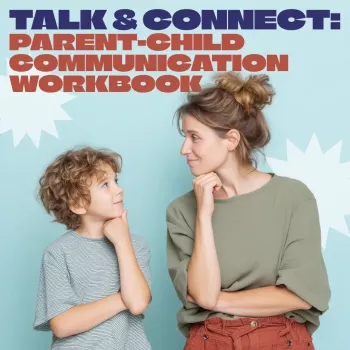
If you want a ready-to-use option that encourages consistent check-ins and calmer conversations, Talk & Connect: Parent-Child Communication Workbook is designed to support positive parenting through guided practice and conversation starters. It’s an easy fit for busy schedules because you can use it in short sessions and repeat what works.
Because parent-child connection improves when adults feel supported too, some families pair communication routines with broader self-care habits. Whole You: Holistic Wellness Guide can complement family routines by helping caregivers build steadier energy, stress management, and day-to-day wellness habits.
Product Snapshot: Talk & Connect Workbook
| Item | Details |
|---|---|
| Title | Talk & Connect: Parent-Child Communication Workbook – Positive Parenting Guide for Stronger Family Bonds, Conversation Starters, and Emotional Connection |
| Price | $9.99 USD |
| Availability | In stock |
FAQ
What age is a parent-child communication workbook best for?
Most families can adapt the same tools across ages: younger kids often do best with shorter, playful check-ins, while tweens and teens typically respond better when they get choices, privacy, and more autonomy in how they share.
How often should families use conversation starters to see a difference?
Small consistency usually works best: aim for 10–15 minutes once or twice a week, plus brief daily check-ins. Progress often shows up through repetition and repair, not one perfect conversation.
What if my child refuses to talk about feelings?
Try side-by-side activities, offer “now or later” choices, and use simple reflections that name what you notice without pushing. Building safety and trust first often makes deeper conversations possible later.











Leave a comment