Indoor Cat Enrichment: DIY Toys, Play & Home Setup
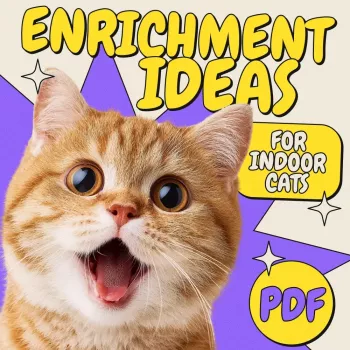
Enrichment Ideas for Indoor Cats: DIY Toys, Play Routines, and Cat-Friendly Home Tips
Indoor cats thrive when their day includes hunting-style play, opportunities to climb and scratch, and small challenges that let them “work” for food and attention. Use the ideas below to build simple routines, rotate activities to prevent boredom, and create a home setup that supports natural feline behaviors—without needing a lot of space or expensive gear.
Signs an Indoor Cat Needs More Stimulation
- High-energy “zoomies” at the same times daily with limited play outlets
- Attention-seeking behaviors: yowling, pawing, knocking items off surfaces
- Overgrooming, sudden scratching of furniture, or chewing non-food items (rule out medical issues first)
- Low activity or “couch potato” behavior paired with weight gain and reduced interest in toys
- Tension between cats in multi-cat homes due to limited resources or predictable routines
If you notice a sudden behavior shift (especially hiding, aggression, or litter box changes), schedule a veterinary check to rule out pain or illness before changing routines.
Daily Enrichment Pillars (Rotate for Variety)
- Hunt-play: short sessions that mimic stalk → chase → pounce → “catch”
- Food enrichment: puzzle feeders, scatter feeding, lick mats, and “foraging” stations
- Vertical territory: cat trees, window perches, shelves, and safe climbing routes
- Scratching and scent: multiple scratchers (vertical/horizontal) and acceptable scent-marking spots
- Social and calming enrichment: gentle brushing, clicker training, and predictable quiet time
- Sensory novelty: new cardboard boxes, paper bags (handles removed), and safe rotating toys
For science-backed guidance on environment and stress reduction, reputable resources include International Cat Care (iCatCare), the ASPCA, and AAFP Cat Friendly.
A Simple Play Routine That Works (Even on Busy Days)
- Aim for 2–3 play sessions daily, 5–10 minutes each; shorter and more frequent often works best
- Start with a wand toy or lure that moves like prey: slow creep, sudden dart, then pause
- End each session with a “catch” (let the cat win) and follow with a small meal or treat to complete the hunt cycle
- Use a timer and stop before overstimulation (tail lashing, skin twitching, sudden biting)
- Rotate toys every few days to keep them “new”—store the rest out of sight
Sample 7-Day Indoor Cat Enrichment Schedule (Mix-and-Match)
| Day | Morning (5–10 min) | Afternoon (2–5 min) | Evening (5–10 min) |
|---|---|---|---|
| Mon | Wand toy stalk-and-pounce | Treat scatter in 2 rooms | Puzzle feeder dinner + short training (sit/target) |
| Tue | Fetch or kibble “toss hunt” | Window perch bird watching | Hide-and-seek lure under a blanket |
| Wed | Climb loop (tree → shelf → perch) | Lick mat calm session | Laser-to-toy transition + treat finish |
| Thu | DIY paper ball chase | Scent swap: catnip/silvervine toy | Cardboard box maze exploration |
| Fri | Feather lure “mouse” style | Scratch station reward | Food puzzle + gentle brushing |
| Sat | Short clicker training | Foraging cups (kibble in muffin tin) | Wand toy + “catch” + meal |
| Sun | New object day (box/bag) | Quiet enrichment (bird video 5 min) | Family play rotation + treat finish |
DIY Toys and Low-Cost Enrichment (Safe Materials Only)
- Cardboard box playground: cut cat-sized doors, add a paper “tunnel,” and rotate layouts weekly.
- Paper ball “prey”: tightly crumple paper; supervise if the cat shreds and eats paper.
- Muffin-tin puzzle: place treats in a few cups, cover some with ping-pong balls to increase difficulty.
- Sock “kicker” toy: fill a sock with fabric scraps and a pinch of catnip; tie securely and inspect often for holes.
- Toilet-paper-roll foraging: fold ends inward with a few kibbles inside; adjust difficulty by how tightly it’s folded.
- DIY wand: attach a sturdy ribbon to a dowel—avoid string/yarn that can be swallowed; supervise and store after play.
A rotation strategy helps: keep 3–5 toys available, then “swap the set” every few days so yesterday’s toy feels new again.
Cat-Friendly Home Setup: Make the Space Work Harder
- Create at least one vertical route per main room: perch + scratcher + resting spot.
- Place scratchers where cats naturally mark: near sleeping areas, entrances, and favorite windows.
- Offer multiple resting options: warm sunny spot, shaded quiet nook, and a higher “lookout.”
- Use “resource spread” in multi-cat homes: separate food/water/litter stations to reduce conflict.
- Add predictable observation stations: window perch, bird feeder view (outside), or secure balcony catio.
If a cat avoids a room or becomes tense around another pet, add “traffic lanes” up high (tree to shelf to perch) so they can pass without crowding.
Food Enrichment and Healthy Treat Strategies
- Swap one regular bowl meal a day for a puzzle feeder or foraging game to slow eating.
- Use micro-rewards during training instead of large treats; keep total treats modest.
- Build difficulty gradually: start easy so the cat succeeds, then add steps.
- For wet food: use a lick mat or spread thinly on a plate to extend mealtime.
- If weight management is a goal, measure daily portions and “spend” part of dinner in puzzles.
To make foraging feel natural, place small “finds” where your cat already travels—near a scratcher, by a perch, or at the end of a short hallway—then change locations the next day.
Safety and Common Mistakes to Avoid
Printable Guide: A Quick Way to Stay Consistent
If you want a ready-to-use plan you can print and stick on the fridge, see the Printable cat enrichment guide with DIY toys, play routines, and home tips.
It also helps to keep emergency basics organized. Pair your routine with the Pet first-aid cheat sheet for home emergencies so you can respond quickly if a toy breaks, a nail tears, or a minor mishap happens.
FAQ
What are easy dog enrichment ideas at home?
Easy options include scatter feeding, snuffle mats, puzzle toys, and short training sessions with tiny rewards. Many of the same concepts work for cats when adapted to hunting-style play (stalk-chase-pounce) and more vertical space to climb and observe.










Leave a comment