Critical Thinking eBook: Decision Skills & Brain Teasers

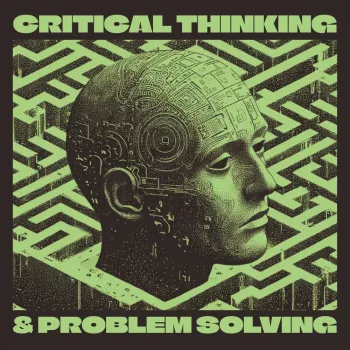
Critical Thinking & Problem Solving eBook: Smarter Decisions, Brain Teasers, and Everyday Life Skills
Clear thinking is a practical skill that improves choices at work, in relationships, and under pressure. The Critical Thinking & Problem Solving eBook (digital download) focuses on building decision-making habits, spotting common reasoning traps, and practicing structured problem solving through short exercises and brain teasers that translate into real-life confidence. Instead of treating “good judgment” as a personality trait, it treats it like a trainable routine: notice what matters, test assumptions, and choose with clarity.
What this eBook helps build
- Decision clarity: separate facts, assumptions, and opinions before choosing a path
- Problem framing: define the real problem so solutions don’t target symptoms
- Reasoning strength: identify weak evidence, missing context, and faulty logic
- Mental flexibility: switch approaches when a method isn’t working
- Practical practice: use brain teasers and prompts to train attention and pattern recognition
Critical thinking is widely defined as disciplined, reflective judgment that improves how decisions are formed and evaluated. For a concise definition, see the APA Dictionary of Psychology entry on critical thinking.
When stronger thinking skills matter most
- High-stakes or stressful moments where quick judgments can backfire
- Information overload: too many options, conflicting advice, unclear data
- Workplace problem solving: diagnosing bottlenecks, prioritizing tasks, resolving team disagreements
- Personal decisions: budgeting, purchases, health routines, and time management
- Communication challenges: debating respectfully, asking better questions, avoiding misunderstandings
Many everyday mistakes come from mental shortcuts (biases) that feel efficient but distort judgment. For a deeper overview of these patterns, the Stanford Encyclopedia of Philosophy on cognitive bias is a helpful reference.
A simple critical-thinking workflow to use daily
When decisions start to feel urgent or messy, a lightweight workflow can keep the process grounded. This one is designed to work in a notebook, a notes app, or a quick “decision log” template.
- Pause and label the decision: what is being decided, and by when?
- List constraints: time, cost, responsibilities, and non-negotiables
- Gather signals, not noise: prefer primary sources, measurable indicators, and direct observations
- Generate at least three options: a default choice, a cautious choice, and a bold choice
- Stress-test options: look for failure points, hidden costs, and second-order effects
- Choose, then reflect: what would prove this choice was wrong, and what would prove it was right?
This approach aligns well with the “slow thinking” habits described in Daniel Kahneman’s work on judgment and decision-making. If you want context behind why quick intuitions sometimes mislead, see Thinking, Fast and Slow (overview).
Common thinking traps and quick counter-moves
Bias isn’t a character flaw; it’s a default setting. The goal is to notice the pattern early enough to apply a simple counter-move.
Thinking traps and practical fixes
| Trap | What it looks like | A fast fix |
|---|---|---|
| Confirmation bias | Only noticing information that supports the preferred answer | Ask: “What evidence would change my mind?” |
| Availability bias | Overweighting memorable stories and recent events | Compare to base rates or broader data |
| Sunk cost fallacy | Continuing because of time/money already spent | Ask: “If starting today, would I choose this?” |
| Overconfidence | Treating guesses as facts | Use a confidence range and identify unknowns |
| Framing effect | Different choices depending on how options are phrased | Restate the decision in neutral terms |
Why brain teasers help (when used correctly)
- They build persistence: staying engaged when the answer isn’t immediate
- They train pattern recognition and hypothesis testing
- They encourage switching strategies instead of repeating the same failed approach
- They highlight the difference between intuitive answers and verified answers
- Best practice: after solving, summarize the method used and how it generalizes to real problems
Used this way, puzzles become more than entertainment: they’re short, repeatable reps for attention control and decision discipline.
What’s included in the digital download
- A structured guide to critical thinking and practical problem solving
- Decision-making frameworks that can be reused for work and personal life
- Brain teasers and exercises designed to strengthen reasoning habits
- Life-skill prompts to apply concepts to real situations (money, time, communication, planning)
- Instant access as a digital download so practice can start right away
Who this is for
- Students building study strategies, analysis skills, and exam reasoning
- Professionals who need to make better decisions with limited time and imperfect information
- Entrepreneurs and creators prioritizing projects and testing ideas
- Anyone wanting sharper thinking habits, fewer impulsive choices, and more consistent follow-through
How to get the most value from the guide
Related digital guides that pair well with critical thinking practice
- Budgeting Like a Pro: Complete eBook — turn clearer reasoning into better financial habits through categories, tradeoffs, and goal tracking.
- Whole You: Holistic Wellness Guide — support decision consistency by improving sleep, stress management, and daily routines.
For the core skill-building track, start with the Critical Thinking & Problem Solving eBook – Digital Download Guide for Smarter Decision Making, Brain Teasers & Life Skills Ebook and add one companion guide once your practice routine feels steady.
FAQ
How does the digital download work after purchase?
After checkout, access is typically provided via a download link so the file can be saved to your device or cloud storage. You can open it using common eBook or PDF reader apps, depending on the included format.
Is this useful without a background in logic or philosophy?
Yes. The guide is designed to be beginner-friendly, using practical frameworks and short exercises that teach by doing rather than relying on heavy theory.
How long does it take to notice improvement in decision making?
Small gains often show up within days when you practice a few minutes daily, especially by pausing and labeling decisions before acting. Stronger habits typically build over several weeks when paired with a decision log and a brief weekly review.











Leave a comment