7-Day Family Connection Plan With Printables & Checklist
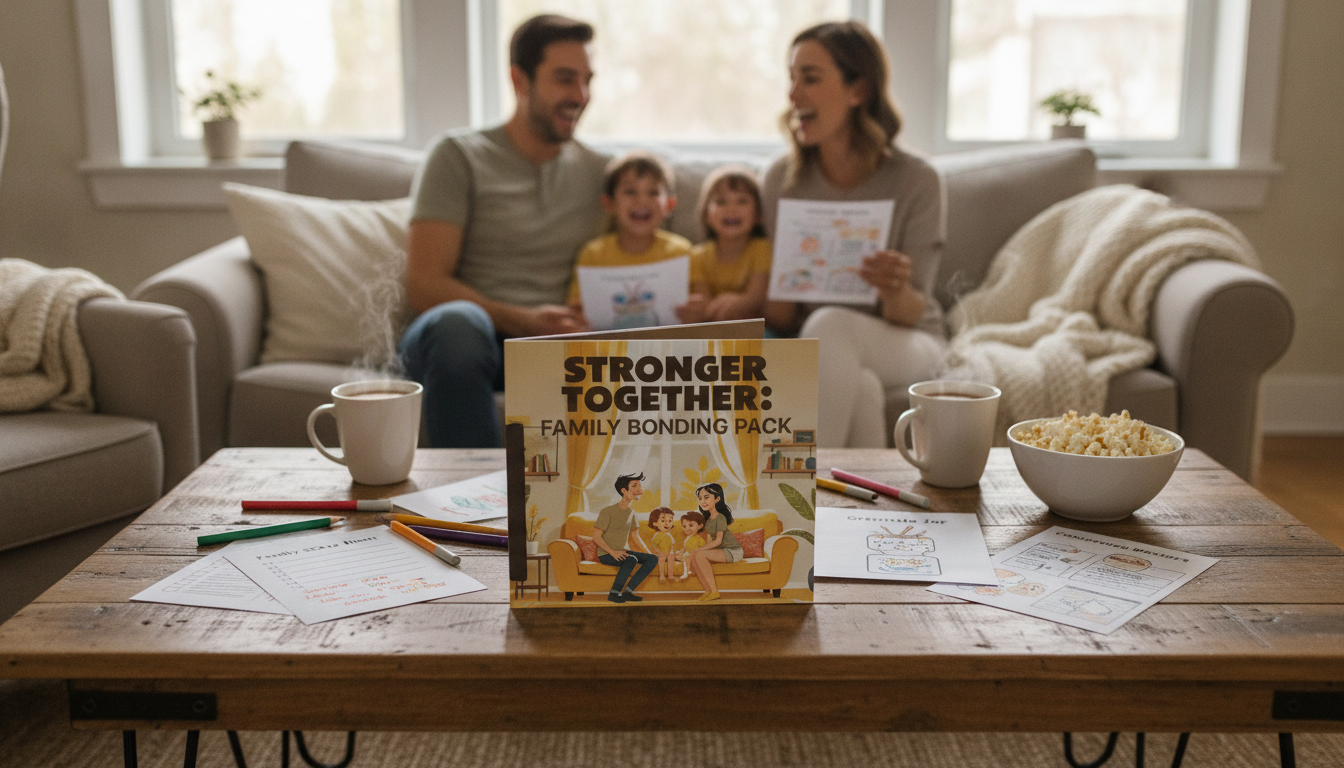
Stronger Together: A Simple Plan for Meaningful Family Time
Busy schedules can make it hard to connect in ways that feel calm and genuine. A small, repeatable routine—mixing quick at-home moments with occasional outdoor time—often works better than big, complicated plans. The goal isn’t a “perfect” family day; it’s building enough shared attention that everyone feels seen week after week.
Research-backed concepts like responsive “serve and return” interactions (where one person reaches out and another responds) help explain why even short moments matter for connection. If you’d like a deeper read, Harvard’s Center on the Developing Child breaks it down clearly: Serve and Return.
What “stronger together” looks like in everyday life
- Connection can happen in short bursts: 10 minutes after dinner, a quick walk around the block, or a simple bedtime check-in can go a long way.
- Consistency beats intensity: a few reliable rituals often feel better (and are easier to keep) than occasional “all-day” plans that require lots of energy.
- Shared attention matters more than spending money: simple games, conversation prompts, and small challenges create closeness without adding pressure to the budget.
- Include everyone: rotate who picks the activity so kids and parents feel equally valued and invested.
When family time feels tense or easily derailed, it can help to return to the basics of positive parenting and relationship-building. Two helpful overviews are the CDC’s guidance on supportive routines (CDC – Positive Parenting Tips) and the APA’s summary of healthy family relationships (American Psychological Association – Building Healthy Family Relationships).
What’s inside the Stronger Together Family Bonding Pack
Stronger Together: Family Bonding Pack is a digital download designed for real-life schedules—immediate access, printables for screens-off time, and flexible ideas you can scale up or down depending on the day.
- Digital format for quick access, plus printables that make it easy to put phones away.
- At-home connection activities for weekdays, low-energy evenings, and rainy days.
- Outdoor activities that encourage teamwork, curiosity, and shared experiences—without needing a big outing.
- A family time checklist to track small wins and keep momentum without pressure.
- An eBook-style guide to help choose options that match age, mood, and time available.
Quick activity picker (choose based on time and energy)
| Time available | Energy level | At-home ideas | Outdoor ideas |
|---|---|---|---|
| 5–10 minutes | Low | One-question check-in, gratitude round, “two highs and one low” | Mailbox walk, cloud-spotting, color hunt |
| 10–20 minutes | Medium | Mini scavenger hunt, family story chain, printable challenge | Nature bingo, sidewalk games, photo mission |
| 20–45 minutes | High | Family game night, build challenge, kitchen helper activity | Park relay, neighborhood exploration, teamwork obstacle course |
At-home activities that feel doable on busy days
- Conversation starters: keep a small set of prompts near the table or in a kitchen drawer. Aim for short answers and a “no fixing, no judging” vibe.
- Cooperative challenges: choose tasks where the win is shared (build, solve, create) instead of head-to-head competition. This helps siblings (and adults) stay on the same team.
- “Reset” routines: after school or work, try 10 minutes of calm together before homework or screens—coloring a printable page, a quick card game, or a quiet snack chat.
- Creative micro-projects: one-page activities work well when attention spans are short: a drawing prompt, a family “bucket list” brainstorm, or a tiny craft that can be finished in one sitting.
If the household pace has been intense, pairing family connection with adult self-care can make routines easier to sustain. For parents who want a simple, beginner-friendly reset, Whole You: Holistic Wellness Guide offers practical ideas for nutrition, movement, and mental wellness that fit into busy weeks.
Outdoor connection activities that don’t require a big outing
- Neighborhood missions: pick a theme (shapes, colors, sounds) and take a short walk to “collect” finds together—no supplies needed.
- Teamwork games: do a simple relay, a timed “find five things” challenge, or a “build a path” activity using safe objects like chalk or cones.
- Curiosity time: let kids lead for 10 minutes—choose the direction, the stops, and what to notice. Adults follow the lead and ask one or two warm questions.
- Seasonal rituals: keep it predictable and low-effort: a weekly sunset check, a leaf-collection day, or a “first warm day” picnic in the yard.
The best part of short outdoor moments is how quickly they reset the mood. Even a brief walk can lower the “friction” that builds up after a long day indoors.
How to use a family time checklist without turning it into homework
Making it work for different ages and family setups
A simple 7-day connection plan (repeat anytime)
If you want a ready-to-use set of prompts, printables, and a tracking checklist to keep the plan simple, Stronger Together: Family Bonding Pack is built for repeatable weekly routines—especially when time and energy change day to day.
FAQ
What ages does the Family Bonding Pack work best for?
It’s flexible across ages: younger kids can do shorter, simpler versions, while older kids can take leadership roles (like being the “host” or “clue-giver”) to keep it engaging. Mixed-age families can rotate roles so everyone gets a turn to lead and a turn to follow.
Do the activities require special supplies or a lot of prep?
Most activities use common household items and print-and-go pages, so prep stays minimal. Optional add-ons like sidewalk chalk, a simple timer, or a small prize jar can make routines feel extra fun without becoming complicated.
How can families stay consistent when schedules are unpredictable?
Choose 2–3 activities each week and keep a “shortest option” as a fallback so you can still count the day as connected. Anchoring routines to existing moments—like dinner, bath time, or bedtime—also makes them easier to repeat.












Leave a comment