Pet First Aid Cheat Sheet: Emergency Steps & Kit List
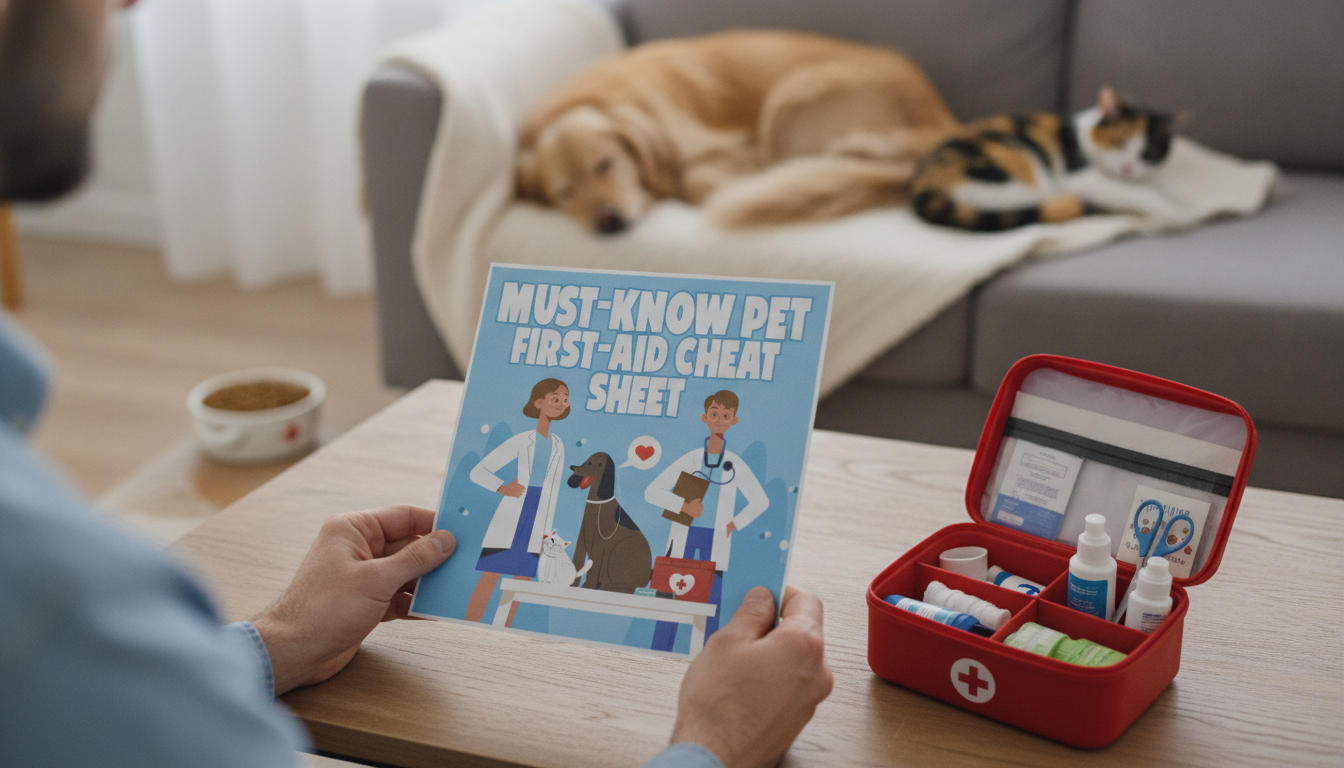
Must-Know Pet First-Aid Cheat Sheet: A Calm, Fast Plan for Pet Emergencies
Pet emergencies can feel chaotic, but a simple, quick-reference plan helps you make safer choices while professional care is on the way. The goal of pet first aid isn’t to “fix” the problem at home—it’s to protect your pet from further harm, reduce risk (to you and your pet), and get to veterinary care faster with clear details. If you’re ever unsure, call an emergency clinic early and follow their instructions. For more guidance, see First aid tips for pet owners | American Veterinary Medical Association.
First priorities: stay safe, stay calm, and assess quickly
- Scan the scene first: remove hazards (traffic, other animals, broken glass, chemicals, electrical cords) before approaching. Your safety affects your pet’s outcome.
- Prevent bites and sudden movements: pain and fear can trigger biting, even in gentle pets. Use a towel or blanket to gently restrain if needed, and keep hands away from the mouth.
- Do a rapid check: confirm breathing, level of alertness, bleeding, and obvious injuries. If safe, note gum color and capillary refill time (how quickly gums turn pink again after a gentle press).
- Call a veterinarian or emergency clinic early: you can often get immediate next-step guidance while you prepare to transport.
- Keep pets warm and quiet: limit movement, especially after falls, car accidents, or suspected spinal injury. Carry instead of letting them walk when possible.
What counts as an emergency: when to go now
When a red-flag sign shows up, don’t “watch and wait.” Go to urgent veterinary care right away, especially if symptoms are worsening or your pet can’t stay upright. For further reading, see Pet First Aid Kit | Oregon Veterinary Medical Association.
- Breathing trouble: noisy breathing, blue/gray gums, repeated gagging with nothing produced, or open-mouth breathing in cats.
- Uncontrolled bleeding: deep wounds or blood soaking through multiple layers of cloth/gauze.
- Seizures: a first-time seizure, a seizure lasting more than a few minutes, repeated seizures, or any seizure plus possible toxin/heat exposure.
- Suspected poisoning: chewed medication, rodent bait exposure, antifreeze, toxic plants (like lilies for cats). Call first—don’t induce vomiting unless told to.
- Bloat warning signs (deep-chested dogs): unproductive retching, distended belly, sudden restlessness, collapse.
- Urinary blockage concerns: repeated straining, crying in the litter box, or inability to urinate—especially urgent in male cats.
- Collapse or shock signs: extreme weakness, pale gums, severe pain, or swollen face after a sting (possible anaphylaxis).
Urgent signs and the first action to take
| Sign | Why it matters | First action |
|---|---|---|
| Not breathing / very weak breathing | Oxygen deprivation is immediately life-threatening | Call emergency vet; begin CPR only if trained; transport immediately |
| Heavy bleeding | Shock risk and rapid blood loss | Apply firm pressure with clean cloth; keep pressure during transport |
| Suspected toxin ingestion | Some toxins act quickly; the wrong home remedy can worsen outcomes | Call vet/poison hotline with product details; follow instructions precisely |
| Heatstroke signs (panting, collapse, red gums) | Organ damage can develop fast | Move to cool area; cool with room-temp water; go to vet urgently |
| Bloat signs | Stomach twisting can be fatal without surgery | Do not wait; go to emergency clinic immediately |
Step-by-step first aid for common situations
- Bleeding and wounds: apply continuous pressure for 5–10 minutes. Add layers if blood soaks through (don’t pull off the first layer if it sticks). Wrap snugly but not so tight that toes swell or feel cold.
- Choking: look for panic, pawing at the mouth, gagging, or sudden distress. Only sweep the mouth if the object is visible and easily removed—blind finger sweeps can push objects deeper. If your pet becomes weak or unconscious, go to emergency care immediately.
- Burns: cool the area with cool (not icy) running water for several minutes. Don’t apply butter, oils, or creams. Cover with a clean, non-stick dressing and seek veterinary care.
- Fractures/suspected spinal injury: limit movement. Use a board, sturdy blanket, or towel as a stretcher. Keep head and neck aligned, and avoid twisting while lifting.
- Seizures: keep hands away from the mouth. Move furniture or objects away, dim lights, and time the seizure. Afterward, keep your pet warm and quiet and contact a vet.
- Heatstroke: move to shade or AC. Wet with cool water and use airflow (fan/car vents). Avoid ice baths. Stop active cooling once panting eases and get urgent veterinary evaluation.
- Cold exposure: dry your pet and warm gradually with blankets. Avoid direct heat sources (heating pads can burn). Seek care if lethargy appears, shivering won’t stop, or gums look pale.
What to keep in a pet first-aid kit (and what to skip)
A well-stocked kit saves time when seconds count. Keep one at home and a smaller version in the car for trips, hikes, and boarding days.
Emergency contact plan and transport tips
Printable quick-reference: keep the steps visible
Recommended printables (quick access when it matters)
- Must-Know Pet First-Aid Cheat Sheet (printable emergency guide)
- Whole You: Holistic Wellness Guide (digital download)
FAQ
Should vomiting be induced if a pet ate something toxic?
No—call a veterinarian or a pet poison hotline first. Inducing vomiting can be dangerous for certain toxins, sharp objects, or if your pet is lethargic, seizing, or flat-faced; follow professional instructions only.
What are the most important signs of shock in dogs and cats?
Common signs include pale/white gums, rapid heart rate, weakness or collapse, cool ears/paws, and slow capillary refill time. Keep your pet warm and quiet and seek emergency veterinary care immediately.
What should be in a basic pet first-aid kit for home and travel?
Include gauze pads, rolled gauze, self-adherent wrap, medical tape, blunt scissors, tweezers, gloves, saline, a digital thermometer, towels, a muzzle/soft cloth, and a carrier or leash, plus emergency contacts and a current medication list.












Leave a comment