4-Week At-Home Workout Plan: Minimal Gear, Daily Stretches
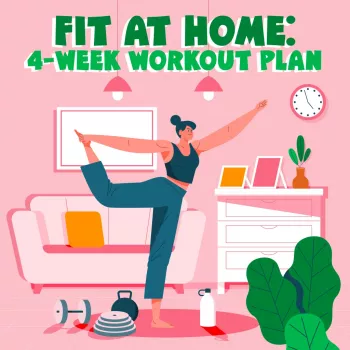
Fit at Home: A 4-Week Minimal-Equipment Workout Plan With Daily Workouts and Stretches
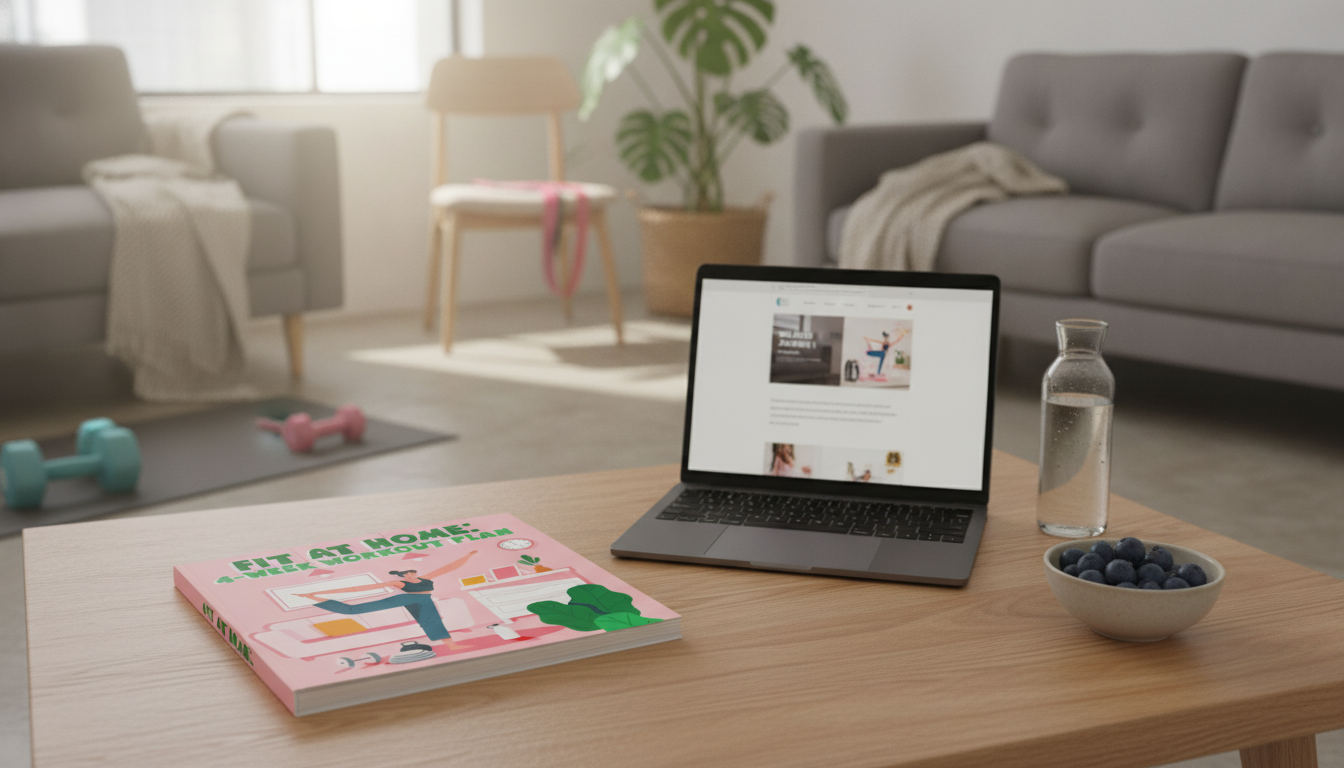
A structured four-week routine can make home training feel simple: show up, follow the day’s plan, and finish with mobility work that supports recovery. This guide covers how to set up your space, what minimal equipment helps most, how to progress week to week, and how to stay consistent with daily workouts and stretches—without turning your living room into a full gym.
What You Need to Get Started (and What to Skip)
Home workouts work best when the setup is friction-free. Aim for a clear area about the size of a yoga mat plus a little room to step forward and back. Footwear is optional; many strength sessions feel great barefoot if your floors are safe and non-slip.
Minimal equipment that gives you the biggest return: a resistance band or loop, a pair of light-to-moderate dumbbells (or two filled water jugs), a sturdy chair or bench, and a mat. Helpful extras include a timer app, a notebook for tracking sets and reps, and a towel for grip.
Skip complex machines for now—and if joints are sensitive, avoid high-impact add-ons until your foundational strength and control feel solid.
Minimal Equipment Swaps for Common Moves
| If you don’t have… | Use this instead | Works well for… |
|---|---|---|
| Dumbbells | Backpack loaded with books | Squats, hinges, rows, carries |
| Bench | Sturdy chair or couch edge | Step-ups, incline push-ups, triceps dips (if shoulders tolerate) |
| Resistance bands | Towel isometric pulls (light) or slower tempo reps | Back activation, controlled strength work |
| Pull-up bar | Table rows (only if safe) or band rows | Upper-back and posture strength |
How the 4-Week Plan Is Structured
A simple weekly rhythm keeps training balanced: strength-focused days, one conditioning day, and mobility-focused recovery built in. Each daily session follows the same flow:
- Warm-up: 5–8 minutes (easy movement + activation)
- Main workout: 20–35 minutes (strength or conditioning)
- Cooldown stretches: 5–10 minutes (hips, thoracic spine, hamstrings, calves, shoulders)
Progression stays straightforward. Each week you add a small challenge—more reps, a slower tempo, slightly shorter rest, or a harder variation. Across the week, lower body, upper body, core, and posture work are distributed to reduce overuse and keep you training pain-free longer. Recovery is treated as training, not an afterthought.
For science-backed context on weekly movement targets and health benefits, review the Physical Activity Guidelines for Americans (2nd edition) and the CDC’s overview of physical activity benefits.
Week-by-Week Progression (Simple, Repeatable, Effective)
- Week 1 (Base): Learn form, choose comfortable variations, and stop 1–2 reps before failure.
- Week 2 (Build): Add 1 set to key moves or add 2–3 reps per set while keeping technique strict.
- Week 3 (Challenge): Reduce rest by 10–20 seconds or use a tougher variation (e.g., elevated split squat, slower eccentric).
- Week 4 (Consolidate): Keep intensity steady and focus on consistency; match or slightly beat Week 3 performance without sacrificing form.
- Deload option: If sleep or stress is high, keep Week 4 volume lighter while maintaining daily mobility.
Strength work doesn’t need to be complicated to be effective. The American College of Sports Medicine regularly emphasizes progressive overload and consistency as key drivers for resistance training outcomes; their resources are a helpful reference point: ACSM – Resistance Training Guidance.
Daily Workout Templates (Mix-and-Match Without Guesswork)
Use these templates to build each day quickly, especially if you train at different times. Keep movements controlled, prioritize clean reps, and finish with short stretching.
Strength A (Lower + Core)
- Squat pattern: goblet squat, bodyweight squat, or box squat
- Hinge pattern: dumbbell RDL, backpack RDL, or hip hinge good morning
- Unilateral legs: split squat, reverse lunge, or step-up
- Core anti-rotation: band Pallof press or suitcase carry
- Finisher: calf raises + ankle mobility
Strength B (Upper + Posture)
- Push: incline push-up, floor push-up, or dumbbell floor press
- Pull: one-arm row, band row, or towel isometric row
- Shoulder stability: wall slides or band external rotations
- Rear delts/upper back: band pull-aparts or reverse fly
- Core bracing: dead bug or plank variation
Conditioning (Low-Impact)
Choose intervals that keep joints happy: marching in place, step-ups, shadow boxing, or a brisk walk/bike if available. A practical format is 30–45 seconds on, 30–60 seconds easy, for 10–20 minutes.
Mobility & Stretching (Daily)
If you want a ready-to-follow day-by-day schedule that combines these templates with built-in stretching, see Fit at Home: 4-Week Workout Plan (PDF).
Form Cues That Prevent Common Home-Workout Mistakes
How to Stay Consistent for Four Weeks
For extra support beyond workouts—nutrition basics, stress management, and self-care routines—pair training with Whole You: Holistic Wellness Guide.
Fit at Home: 4-Week Workout Plan PDF (What’s Inside)
Support Your Results Beyond Workouts
FAQ
How long are the daily workouts and stretches?
Most sessions take 30–50 minutes total: a 5–8 minute warm-up, 20–35 minutes for the main workout, and 5–10 minutes of cooldown stretches. If you’re short on time, do one strength circuit and then hit 2–3 key stretches for hips, hamstrings, and shoulders.
Do you need dumbbells to follow a minimal-equipment home plan?
No—dumbbells help, but they’re optional. You can use a loaded backpack, resistance bands, or slower tempo reps (especially longer lowering phases) to keep workouts challenging without heavier weights.
What if a movement hurts (knees, back, or shoulders)?
Stop if you feel sharp pain, then swap to a friendlier variation (like a box squat, reduced range of motion, or incline push-up) and double-check your form. If pain persists or worsens, get guidance from a qualified health professional before pushing intensity.










Leave a comment