Emotional Strength Toolkit for Preschoolers (Ages 3–5)
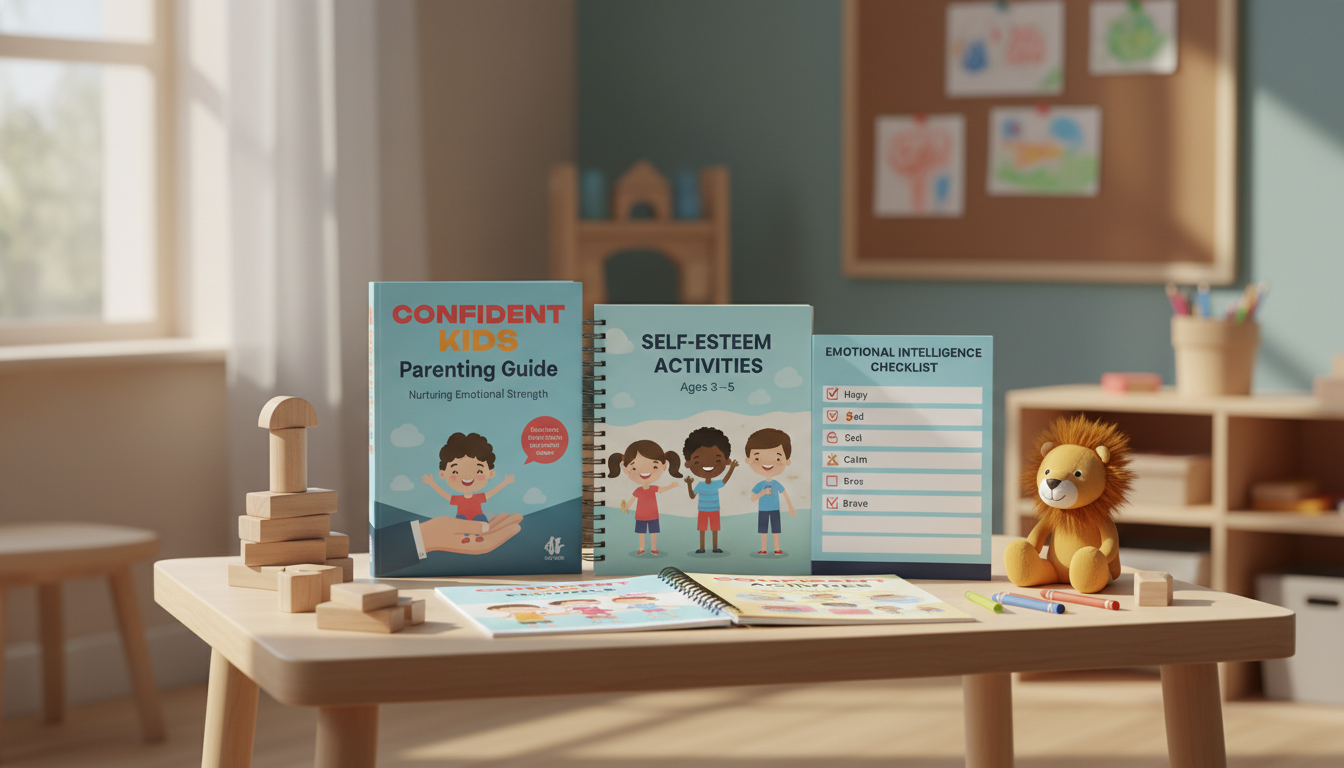
Confident Kids Bundle: A Simple 3-in-1 Toolkit for Building Emotional Strength Ages 3–5
Big feelings can show up as meltdowns, clinginess, power struggles, or sudden shutdowns—especially between ages 3–5 when kids are learning what emotions are and how to handle them. This 3-in-1 bundle combines a practical parenting guide, confidence-building activities, and an emotional intelligence checklist to make everyday moments feel more manageable while supporting self-esteem and emotional skills.
What Emotional Strength Looks Like in Ages 3–5
Emotional strength at this age doesn’t mean “never upset.” It looks like gradually building skills in small, visible ways that add up over time.
- Naming feelings with simple words (mad, sad, worried, excited) instead of only acting them out
- Recovering faster after disappointment (still upset, but able to re-engage)
- Trying again after mistakes with adult support and encouragement
- Beginning empathy skills: noticing when someone else is sad and offering comfort
- Practicing small independence (choosing clothes, helping with simple tasks) without constant conflict
These skills align with what many child development resources describe as typical preschool social-emotional growth, including guidance from the CDC on positive parenting for preschoolers and the American Academy of Pediatrics.
What’s Inside the Confident Kids Bundle (3-in-1)
The Confident Kids Bundle: Nurturing Emotional Strength (3-in-1 Bundle) is designed for real life: quick, repeatable tools you can use in the moment—and a simple way to notice progress without turning it into a big project.
- Parenting guide: clear steps for responding to emotions while keeping boundaries
- Self-esteem activities (ages 3–5): playful prompts and exercises that build confidence through repetition
- Emotional intelligence checklist: a quick reference to notice growth areas and track progress over time
- Designed to fit real routines: short, repeatable moments instead of long lessons
- Useful for common situations: transitions, sharing, sibling conflict, bedtime worries, and frustration tolerance
Bundle Components at a Glance
| Component | Primary Goal | Best Time to Use | What to Look For Over Time |
|---|---|---|---|
| Parenting Guide | Support feelings while maintaining limits | During tough moments (tantrums, refusal, arguing) | Fewer power struggles; quicker calm-down with coaching |
| Self-Esteem Activities (Ages 3–5) | Build confidence through positive practice | Calm moments (after breakfast, before bedtime, weekends) | More “I can do it”; willingness to try and learn |
| Emotional Intelligence Checklist | Spot skill gaps and celebrate growth | Weekly or monthly check-in | Better emotion vocabulary; improved coping choices |
Why Confidence and Emotional Skills Grow Best Through Daily Micro-Moments
Preschoolers learn regulation through co-regulation first—meaning they borrow calm from a steady adult, then slowly internalize the steps. That’s why short, repeatable routines tend to work better than occasional long talks.
- Kids learn regulation through co-regulation first: calm adult presence + predictable steps
- Short practice beats occasional deep talks: 2–5 minute routines stick better at this age
- Consistency creates safety: fewer surprises means less emotional overload
- Validation + limits reduces escalation: “I see you’re upset” and “We still can’t hit” can co-exist
- Progress is non-linear: growth often shows up as shorter meltdowns, not zero meltdowns
This daily-skill approach also fits with widely used social-emotional learning frameworks that emphasize practicing core competencies over time, such as those outlined by CASEL.
How to Use the Bundle as a Weekly Routine (Simple Plan)
A workable plan is one you can repeat even on busy days. The goal is to create a “family default” for big feelings: the same phrases, the same steps, and the same small opportunities to practice.
- Pick one confidence activity to repeat all week (repetition builds mastery)
- Choose one “calm-down tool” phrase from the guide and use it consistently
- Do one short checklist review each week to notice patterns (what triggers, what helps)
- Rotate scenarios: sharing, waiting, losing a game, getting corrected, bedtime separation
- Keep expectations age-appropriate: aim for “improving,” not “perfectly regulated”
Self-Esteem Activities That Work Especially Well for Ages 3–5
Confidence grows when kids experience “I can” moments—especially when adults notice effort, not just outcomes. The activities in the bundle are built to be playful and repeatable, so kids can practice the same skill until it starts to stick.
- Effort-focused praise: notice trying, practicing, and persistence rather than “being smart”
- Choice-within-limits: “Red shirt or blue shirt?” to build agency without chaos
- Helper roles: small responsibilities to create competence (“Can you carry napkins?”)
- Mistake-friendly language: normalize errors as part of learning (“Oops—try again”)
- Emotion labeling games: connect feelings to body signals (“tight fists,” “hot cheeks”)
Emotional Intelligence Checklist: What to Track (Without Overthinking It)
Who This Bundle Fits Best
Getting Started: A Low-Stress First Week
Helpful Add-Ons for the Adults (Optional)
- Whole You: Holistic Wellness Guide | Beginner Wellness Ebook (for simple self-care habits that make it easier to stay calm and consistent)
- Budgeting Like a Pro: Complete eBook (for reducing money stress and building steadier household routines)
FAQ
Is this bundle appropriate for a 3-year-old with frequent tantrums?
Yes. It’s designed for ages 3–5 and focuses on co-regulation (adult-led calming support) while keeping clear boundaries. Start with one calm-down routine from the guide and one confidence activity you can repeat daily.
How long does it take to see improvement in self-esteem and emotional skills?
Many families notice small wins first—like shorter recovery time, more feeling words, or fewer power struggles—within a few weeks of consistent micro-moments. Weekly checklist check-ins help you spot progress that’s easy to miss day to day.
Can caregivers and teachers use the emotional intelligence checklist too?
Yes. The checklist works well across settings and helps adults use shared language and expectations. When the same phrases and boundaries show up at home and in care environments, kids typically adapt faster.











Leave a comment